How the vertical jump test works
Your vertical jump is your standing reach subtracted from the highest point you can touch on a maximum jump. If you reach 90 inches flat-footed and touch 114 inches at the top of a jump, your vertical is 24 inches. That single number is how athletes, coaches, and combine scouts compare lower-body explosiveness across any body size.
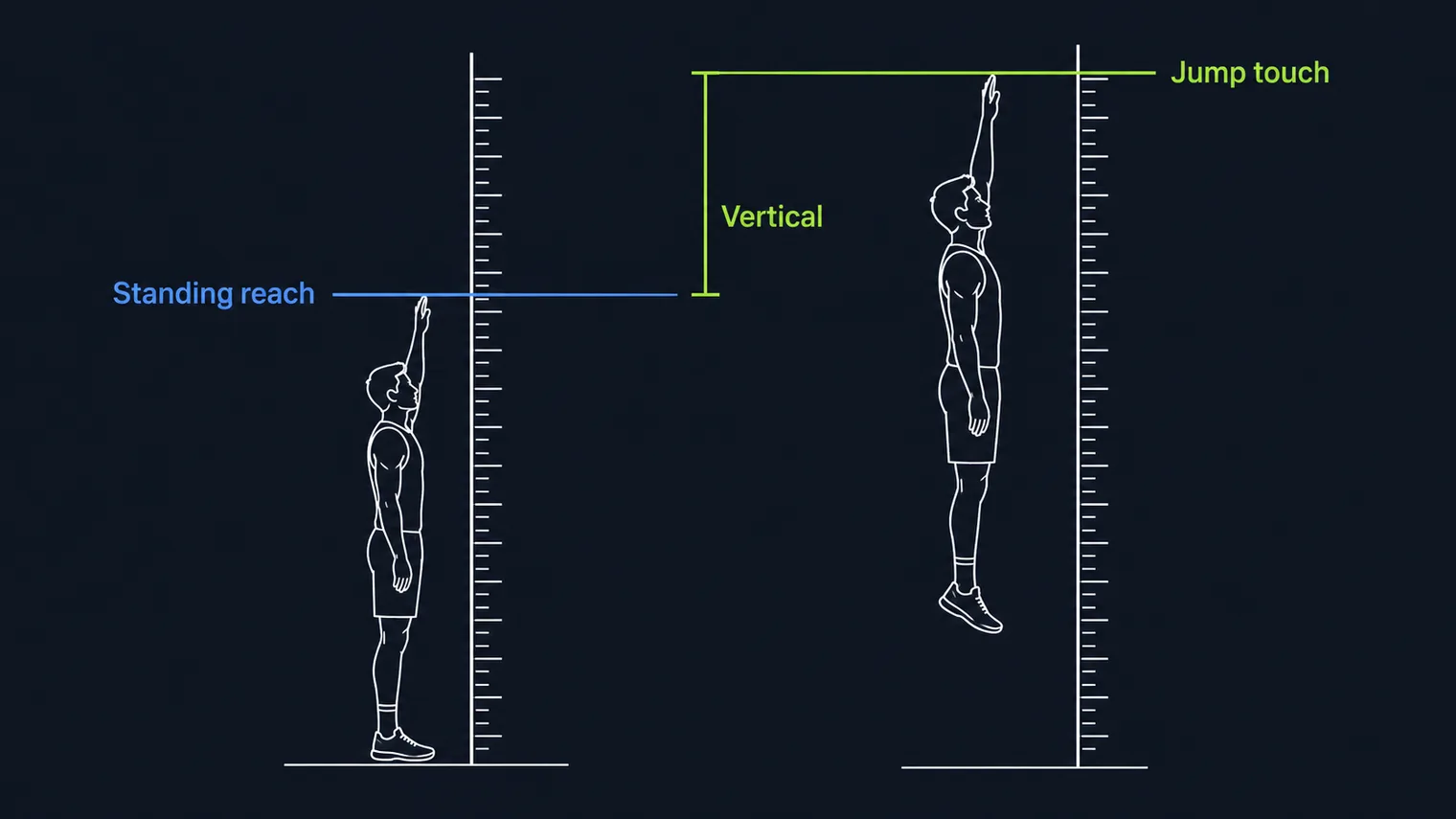
The reason the test subtracts standing reach is fairness. A 6'4" player and a 5'9" player can have the exact same vertical, even though the taller player touches a much higher point. By measuring only the difference, the test isolates the thing that training actually changes: how much force your legs and hips put into the ground. That is why the vertical jump is a standard drill at the NFL combine, in volleyball programs, and in nearly every basketball strength room.
Measuring it at home

You do not need a Vertec or a jump mat. The cheapest accurate method is chalk on a wall:
- Stand side-on to a wall, feet flat, and reach as high as you can. Mark that point. That is your standing reach.
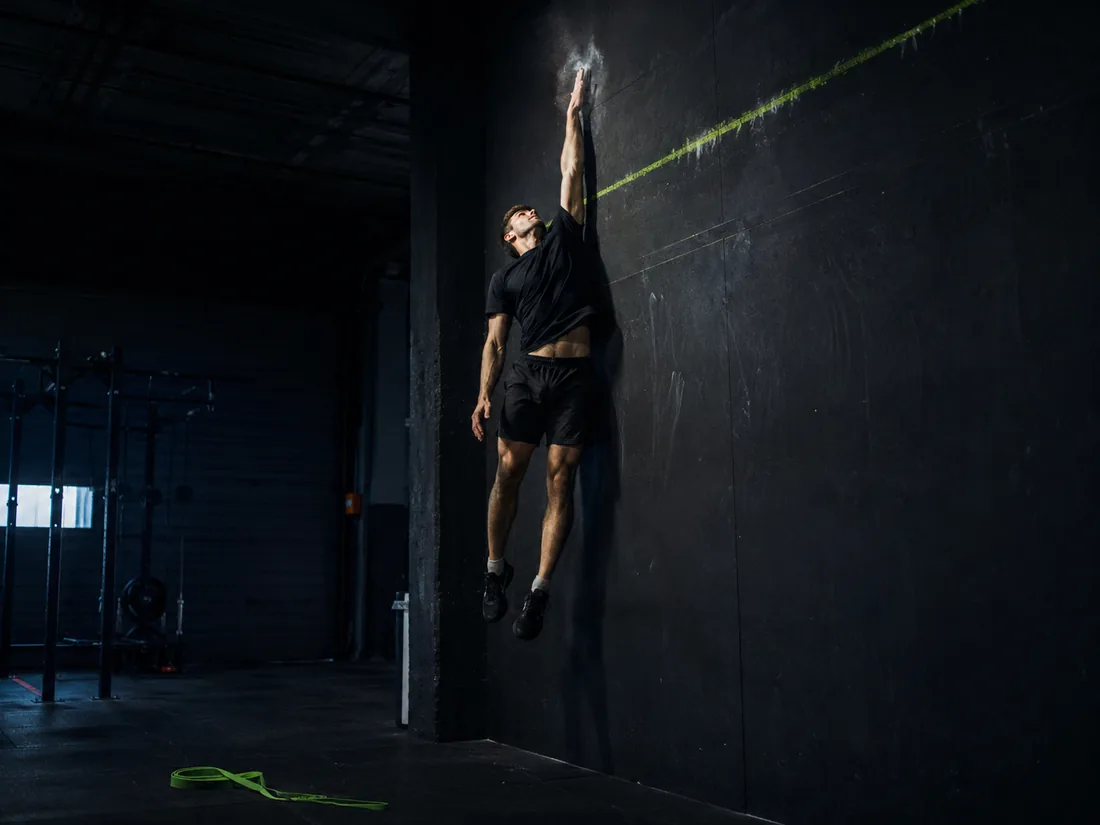
- Chalk your fingertips, take one or two steps if your sport allows an approach, jump as high as possible, and slap the wall at the peak.
- Measure from the standing-reach mark up to the jump mark. That distance is your vertical.
Do three attempts with full rest between them and keep your best. Fatigue lowers your jump fast, so do not test at the end of a long session. For the full method, see our guide on how to measure your vertical jump at home.
What counts as a good vertical jump?
It depends on your age, sex, and sport. An 18-inch vertical is roughly average for an adult man and above average for an adult woman. For a high schooler chasing a dunk it is a starting point; for a college wide receiver it is below the bar. The tables below show typical ranges so you can place your own number in context. Use them as a guide, not a verdict on your potential.
| Age group | Typical range |
|---|---|
| 10–12 | 11–14 |
| 13–15 | 14–17 |
| 16–18 | 16–20 |
| 19–25 | 18–22 |
| 26–35 | 16–20 |
| 36–45 | 14–18 |
| 46+ | 11–15 |
Vertical jump tends to peak in the late teens and early twenties, then declines gradually with age as fast-twitch muscle and tendon stiffness change. Adult women average roughly 12 to 16 inches. These are population averages, not ceilings, and consistent training can push you well past them. For the full breakdown, read average vertical jump by age.
| Sport | Typical range |
|---|---|
| Basketball | 22–28 |
| Volleyball | 19–26 |
| Track & field | 20–28 |
| Football (wide receiver) | 28–34 |
| Soccer | 16–21 |
| General fitness | 16–20 |
See how every sport compares, and what counts as elite in each, in average vertical jump by sport.
What vertical do you need to dunk on a 10ft rim?
The rim sits at 120 inches. To dunk cleanly you need your fingertips to clear the rim by a few inches so the ball goes down and not off the back iron, so most people aim for a touch point around 126 inches. Subtract your standing reach from that target and you have the vertical you need. Someone with a 7'6" (90-inch) standing reach needs about a 36-inch vertical for a clean two-hand dunk, while a longer-armed player at an 8'0" reach needs only about 30 inches. This is exactly why reach matters as much as raw spring, and why the test above asks for your reach instead of just your height. For the numbers at every height, see what vertical you need to dunk.
How fast can you add inches?
Honest numbers keep you from quitting. Most beginners who have never trained jumping add 2 to 4 inches in their first trained year with consistent plyometrics and lower-body strength work, and young or very untrained athletes sometimes see more. Intermediate athletes fight for 1 to 3 inches a year, and advanced jumpers for fractions of an inch. Progress slows because the easy adaptations come first. The fastest gains come from getting stronger in the squat and hinge, then layering in explosive jump work, not from jump training alone. Our full plan is in how to increase your vertical jump, and the exercises with sets and reps are in the vertical jump workout. Chasing a dunk specifically? Follow the honest dunk progression.